- Group Session
- Individual Counselling
- Family Counselling
- Group Counselling
- Yoga & meditation
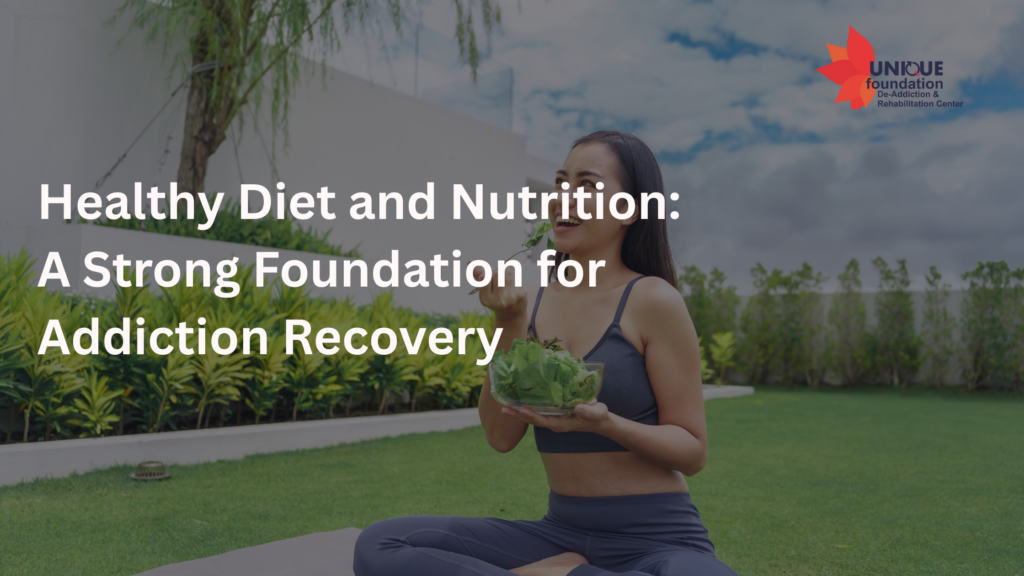
Healthy Diet and Nutrition: A Strong Foundation for Addiction Recovery
Recovery from addiction is not only about quitting substances. It is about healing the body, calming the mind, and rebuilding daily habits that support long-term well-being. One of the most overlooked but powerful tools in addiction recovery is a healthy, balanced diet.
Substance abuse slowly weakens the body. Alcohol, and tobacco affect digestion, damage organs, reduce nutrient absorption, and disturb mental health. When recovery begins, proper nutrition helps the body repair itself, improves emotional stability, and supports clarity of thought. A healthy diet does not replace counseling or therapy, but it plays a vital supporting role in recovery.
This blog explains how nutrition helps in addiction recovery, which foods support healing, and how a structured diet plan strengthens the recovery journey.
Why Nutrition Matters During Addiction Recovery
Addiction puts the body under constant stress. Over time, it creates vitamin deficiencies, weak immunity, hormonal imbalance, and mental fatigue. Many people entering recovery feel tired, anxious, irritable, or depressed. These symptoms are often linked to poor nutrition.
A healthy diet helps by:
- Restoring lost nutrients
- Stabilizing blood sugar levels
- Improving sleep quality
- Supporting brain chemistry
- Reducing cravings naturally
Recovery becomes more stable when the body receives the right fuel. This is why most structured recovery programs, including treatment at a Deaddiction center in Pune, emphasize balanced meals along with therapy and counseling.
How Addiction Affects the Body and Nutritional Health
Different substances harm the body in different ways, but most forms of addiction lead to similar nutritional damage.
Alcohol and Nutrition
Alcohol interferes with the absorption of vitamins like B1, B6, folate, and magnesium. Long-term use weakens the liver, damages digestion, and leads to low energy levels.
Sugar and Craving Cycles
Substance use often increases sugar cravings. This creates unstable blood sugar levels, mood swings, and fatigue, making recovery harder.
A structured nutritional approach helps reverse these effects and supports physical stability during recovery.
The Role of a Healthy Diet in Reducing Cravings
Cravings are one of the biggest challenges in addiction recovery. While emotional triggers play a role, nutritional imbalance often makes cravings worse.
Low blood sugar can increase irritability and urge-driven behavior. Dehydration can feel like anxiety. Lack of protein can affect neurotransmitters related to mood and impulse control.
A balanced diet helps by:
- Keeping blood sugar steady
- Supporting dopamine and serotonin balance
- Reducing stress-related eating
- Improving focus and emotional control
This is why recovery programs at places like a Vyasan mukti kendra Narhegaon in Pune often guide individuals toward regular meals and mindful eating habits.
Essential Nutrients for Addiction Recovery
1. Protein for Brain and Muscle Repair
Protein helps rebuild damaged tissues and supports brain chemicals responsible for motivation and mood. Good sources include:
- Lentils and beans
- Eggs
- Dairy products
- Nuts and seeds
- Lean meats
Including protein in every meal helps control hunger and stabilizes energy levels.
2. Complex Carbohydrates for Energy
Whole grains provide slow-release energy and reduce mood swings. They also help regulate sleep and reduce anxiety.
- Brown rice
- Whole wheat roti
- Oats
- Millets
Avoid refined sugar and processed snacks, as they increase cravings and fatigue.
3. Healthy Fats for Brain Health
Healthy fats support brain healing and emotional balance.
- Groundnuts
- Almonds and walnuts
- Seeds like flax and sunflower
- Natural oils in moderation
These fats support concentration and emotional stability during recovery.
4. Vitamins and Minerals for Healing
Addiction often causes deficiencies in:
- B-complex vitamins
- Vitamin C
- Magnesium
- Zinc
Fresh fruits, vegetables, and balanced meals help restore these nutrients naturally.
Hydration and Its Importance in Recovery
Many people underestimate the power of hydration. Proper water intake:
- Flushes toxins from the body
- Improves digestion
- Reduces headaches and fatigue
- Supports mental clarity
Herbal teas, coconut water, and plain water are better choices than sugary drinks. Hydration also helps reduce false hunger signals and emotional discomfort.
Gut Health and Mental Well-Being
The gut and brain are closely connected. Poor gut health can worsen anxiety, depression, and stress, which are common during recovery.
To improve gut health:
- Include curd or fermented foods
- Eat fiber-rich vegetables
- Avoid excessive caffeine and fried food
- Eat at regular intervals
A healthy gut supports emotional balance and improves response to therapy.
Structured Eating Habits Build Discipline
Recovery is about structure. Fixed meal times create routine, discipline, and predictability. This helps replace chaotic habits associated with addiction.
Structured eating:
- Reduces impulsive behavior
- Improves sleep cycles
- Builds self-control
- Supports therapy outcomes
This approach aligns with recovery philosophies followed at a daru soda kendra or nasha soda kendra, where lifestyle correction plays a major role alongside counseling.
Foods to Avoid During Recovery
Certain foods can slow recovery or trigger cravings:
- Excess sugar and sweets
- Fried and oily food
- Packaged snacks
- High caffeine intake
- Sugary soft drinks
These foods disturb mood balance and energy levels. Moderation is key, not restriction.
Nutrition and Long-Term Relapse Prevention
Healthy eating does not end after detox or initial recovery. Long-term relapse prevention depends on consistent lifestyle habits.
A nutritious diet:
- Supports emotional stability
- Improves stress handling
- Reduces dependency on external stimulants
- Encourages self-care
When combined with counseling, exercise, and family support, nutrition becomes a long-term recovery tool.
Healthy Diet as a Part of Holistic Recovery
Addiction recovery works best when treatment addresses the whole person. Nutrition, therapy, physical activity, and emotional support work together.
A healthy diet strengthens the body so the mind can heal. It supports confidence, energy, and clarity. Over time, good nutrition becomes a form of self-respect and self-discipline, both essential for a substance-free life.
Nutrition and Long-Term Relapse Prevention
Healthy eating does not end after detox or initial recovery. Long-term relapse prevention depends on consistent lifestyle habits.
A nutritious diet:
- Supports emotional stability
- Improves stress handling
- Reduces dependency on external stimulants
- Encourages self-care
When combined with counseling, exercise, and family support, nutrition becomes a long-term recovery tool.
Healthy Diet as a Part of Holistic Recovery
Addiction recovery works best when treatment addresses the whole person. Nutrition, therapy, physical activity, and emotional support work together.
A healthy diet strengthens the body so the mind can heal. It supports confidence, energy, and clarity. Over time, good nutrition becomes a form of self-respect and self-discipline, both essential for a substance-free life.
Frequently Asked Questions (FAQs)
Yes. A balanced diet stabilizes blood sugar and brain chemistry, which helps reduce physical and emotional cravings.
Protein-rich foods, whole grains, fruits, vegetables, and plenty of fluids support healing during early recovery.
Sugar should be limited, not completely avoided. Excess sugar can increase cravings and mood swings.
Many people notice better energy and mood within a few weeks of consistent healthy eating.
No. Diet supports recovery, but counseling, therapy, and emotional support are essential for long-term success.
Final Thought
Recovery is a journey of rebuilding. Every healthy meal is a step toward balance, clarity, and strength. When nutrition becomes part of daily life, recovery feels more stable and sustainable. A healthy diet does not just heal the body, it empowers the individual to move forward with confidence and control.